ChatKit puts a 1-on-1 feedback chat in your iOS app. WishKit puts a feature request board in it, and since SDK 5.2.0 a 1-on-1 chat as well. Both are native Swift SDKs, only one gives you both channels.
Free plan included. No credit card required.
| WishKit | ChatKit | |
|---|---|---|
| Native iOS SDK (Swift Package) | ||
| Public board where users see & vote on ideas | ||
| Direct 1-on-1 chat with users | ||
| Status labels & roadmap states | ||
| Works beyond iOS (macOS, web, SaaS) | ||
| Capture feedback from X posts | ||
| Free to start | ||
| Published pricing | $15/mo flat | Not published |
Based on publicly available information. Spotted something outdated? Let us know.
Credit where due: ChatKit is a neat idea done simply. You add a Swift package, and every message a user sends lands in your web inbox in real time. Bug reports, feature requests, and thank-yous arrive as 1-on-1 chats, with no support stack to set up. For an indie app with a small user base, that personal channel is genuinely pleasant.
Chat does not scale feature requests. The trouble starts when the messages are mostly feature requests. In a chat inbox, ten people asking for dark mode are ten separate conversations. Nobody sees what others asked for, nothing gets voted on, and you end up manually tallying demand across threads.
"It's probably the easiest integration I've ever seen with a dev tool. Honestly well done the work you've been doing with WishKit."

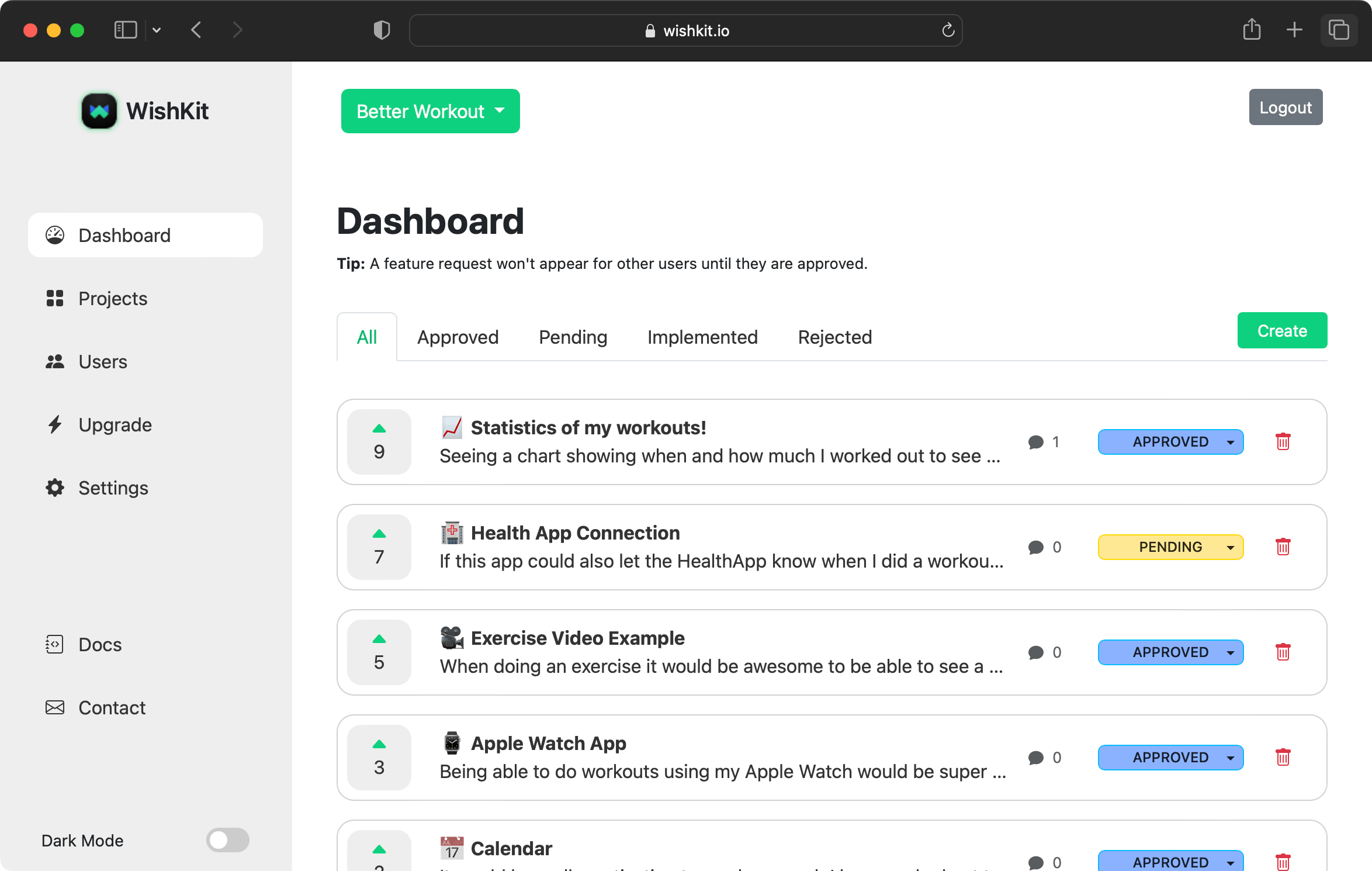
A board turns requests into a roadmap. WishKit makes requests public inside your app: users see existing ideas, vote instead of writing duplicates, and the counts rank your roadmap for you. Status labels close the loop when things ship, and requests can even arrive from posts on X.
And since SDK 5.2.0, WishKit includes the chat too. The feedback board ships with a built-in 1-on-1 chat: users message you privately from inside the app, you read and reply from your dashboard. The personal channel ChatKit is built around and the votable roadmap now live in one SDK, so you do not have to choose.
Both start free. ChatKit advertises itself as free to start, and WishKit has a real free plan. For a young app, either costs you nothing to try.
Only one publishes its prices. ChatKit does not publish paid pricing. WishKit is transparent: free plan, then Premium at a flat $15 a month with unlimited users submitting, voting, and commenting. You know today what you will pay at scale. For boards with voting and published prices, see the best ChatKit alternatives.
Free
$0 / mo
Premium
$15 / mo
Honestly, yes. They solve different halves of the same conversation: ChatKit for private back-and-forth, WishKit for public feature requests and voting. Plenty of apps pair a contact channel with a feature board.
If you only pick one and your inbox is mostly "please add X", the board is the tool built for that job. Set it up in about 100 seconds and see.
No. OpenAI's ChatKit is a web-first chat UI framework for AI apps. This page compares WishKit with ChatKit at trychatkit.com, the in-app feedback chat SDK for iOS. We untangle the naming in our guide to *Kit SDKs.
Yes, and the price is published: one project, unlimited users, no credit card. Premium at $15/mo adds comments, user notifications and a second project. ChatKit says free to start and lists no paid prices.
Both. The same project renders natively in iOS, macOS, visionOS, watchOS and tvOS apps and embeds on a website with two lines of HTML, so app and site share one board.
Setup takes less than a minute. Free plan included, no credit card required.
Try WishKit for free