Two popular feedback tools with very different pricing models. Here is how they actually compare in 2026.
By Martin Lasek · Aug 12, 2026 · 7 min read
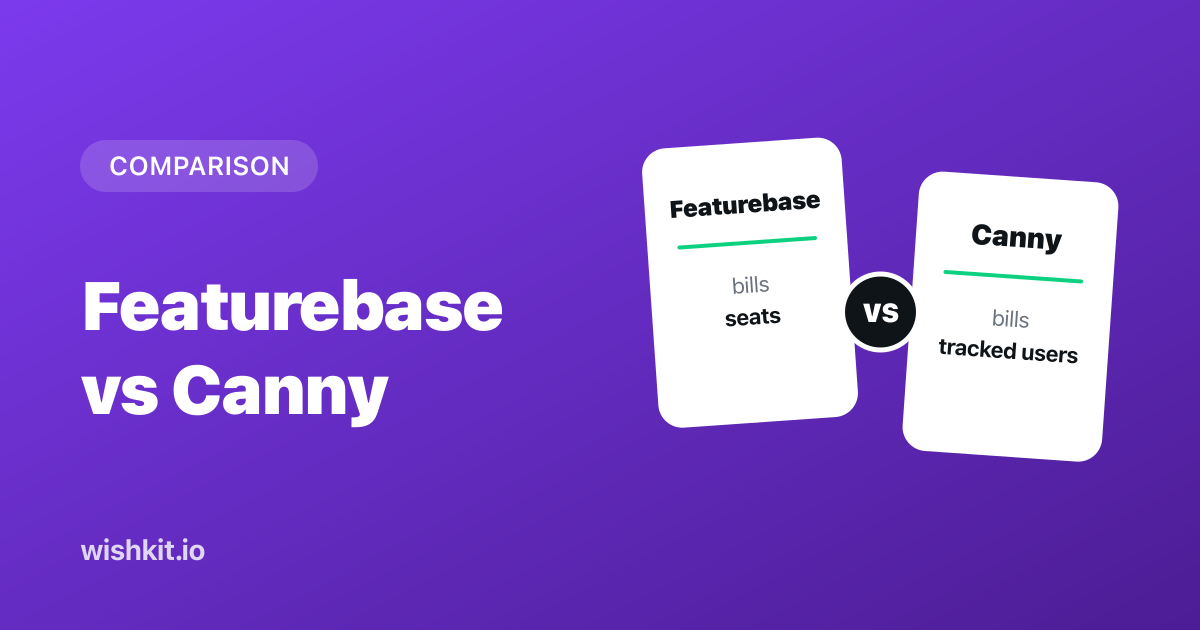
The short version. Canny is the established feedback platform with the deeper integration ecosystem. Featurebase is the younger challenger that bundles support tooling with feedback at a lower entry price. The real difference is how they bill you: Canny charges by how many of your customers leave feedback, Featurebase charges by how many teammates manage it.
Yes, we build a competing product. That is exactly why we keep this factual: the pricing and feature notes below are based on publicly available information, and both tools are good at what they do. The question is which billing model and scope fit you.
| Featurebase | Canny | |
|---|---|---|
| Free plan | ||
| Entry paid price | $29/seat/mo | $79/mo (annual) |
| Billing scales with | Team seats | Tracked users |
| Feedback board, voting, roadmap | ||
| Changelog | ||
| Support inbox + AI agent | ||
| Integration ecosystem depth | Growing | Mature |
Based on publicly available pricing as of August 2026. Spotted something outdated? Let us know.
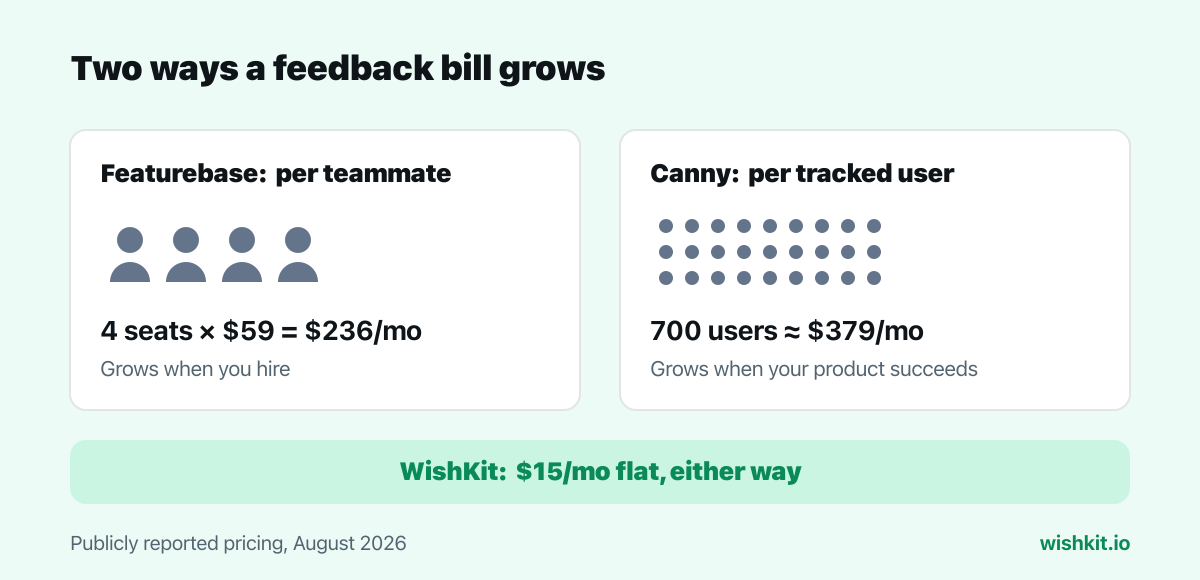
Canny bills on tracked users. The free plan stops at 25 tracked users, meaning customers whose feedback lives in the system. Pro starts at $79 per month billed yearly for the first 100 and climbs on a slider as that number grows, roughly $529 a month at 1,000 tracked users, with custom Business quotes at 5,000 and beyond. The better your feedback program works, the more you pay. The full numbers are in Canny pricing explained.
Featurebase bills on seats. Plans run $29, $59, or $99 per seat per month, where a seat is a teammate who works inside the tool. End users are unlimited. On top of that, paid plans meter the AI support agent at $0.49 per resolved conversation. A small team with lots of users pays little. A big team pays a lot, regardless of user count. We wrote a full Featurebase pricing breakdown if you want the details.
So ask yourself which number will grow faster in your company: customers giving feedback, or teammates managing it. Pick the model that does not tax your growth.
Canny is a feedback platform. Boards, roadmaps, changelog, and an automation layer that deduplicates and extracts feedback from other tools. Its integrations with Jira, Salesforce, Intercom, and the rest of the enterprise stack are the most mature in the category.
Featurebase is a support and feedback suite. You get the feedback features plus a help center, surveys, and a support inbox with an AI agent. If it replaces a dedicated support tool, the bundle can genuinely save money. If you never touch the support side, you are paying per seat for scope you do not use.
Canny's onboarding is known to be lengthy, and its dashboard carries the weight of everything it can do. Featurebase feels lighter and more modern, though the suite approach means there is still a fair amount to configure before it hums.
If reading this comparison left you thinking both tools are more than you need, that is the gap WishKit fills. It is just the feedback board, done well: voting, comments, statuses, merging, a native SwiftUI SDK for Apple platforms, a web embed for SaaS, and capturing feature requests straight from posts on X. Free plan included, Premium at a flat $15 per month, and setup takes about 100 seconds.
See how it stacks up directly: WishKit vs Canny and WishKit vs Featurebase.
For small teams, usually yes. One or two seats on Featurebase cost less than Canny's Growth plan. For larger teams the per-seat model can flip that math, so model your own headcount and user growth before deciding.
Yes. Both offer free plans that are enough to evaluate the core feedback workflow before paying.
Then you probably do not need either platform. A focused tool like WishKit covers collecting, voting, and prioritizing feedback at a flat $15 per month.
Setup takes less than a minute. Free plan included, no credit card required.
Try WishKit for free