Understanding your customers is the difference between being just another app and being a tool people rave about.
By Martin Lasek · Aug 17, 2023 · 4 min read

Understanding customer behavior and finding effective ways to engage them is a common goal for all businesses. The challenge lies in moving beyond being just another app and becoming a tool that customers rave about. The key to achieving this is seeking feedback directly from your users. While this may sound simple, it requires a well-established setup to be effective.
Once you ask for feedback, it is crucial to actively listen to the responses. It is easy to overlook this step, but it is vital for understanding your customers' needs and preferences. To maximize the benefits of customer feedback, you need a comprehensive strategy: clear goals, the right channels, consolidated data, a feedback management system, active engagement, and continuous iteration.
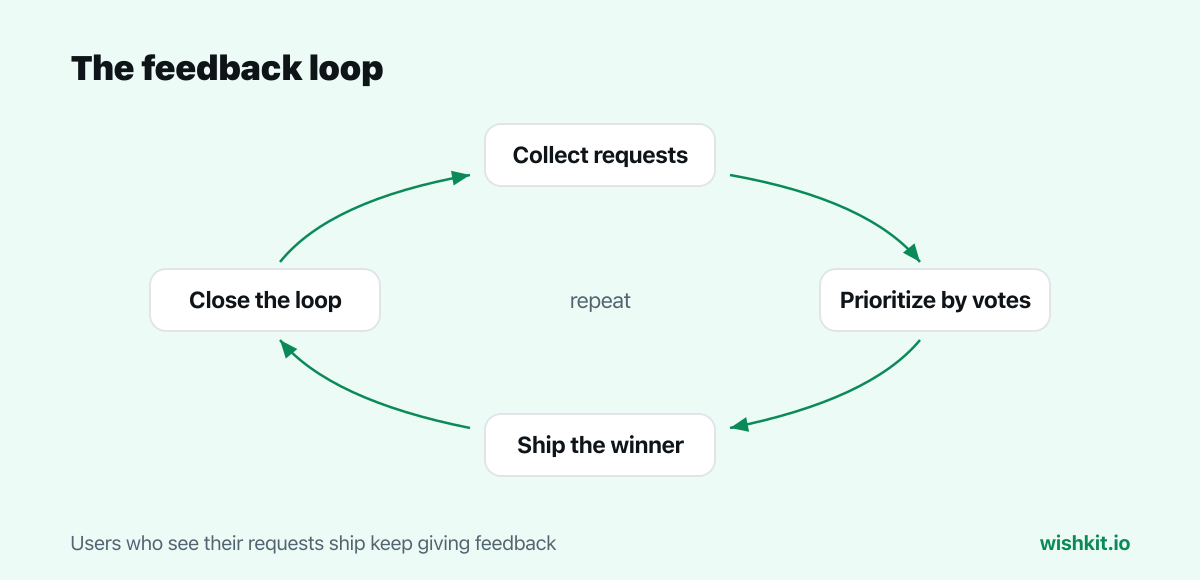
The importance of customer feedback cannot be overstated. It provides valuable insight into your customers' experiences and perceptions, helping you enhance your products and services. Feedback arrives through many channels: reviews, feature requests, bug reports, social media posts, support conversations, sales calls, emails, and survey responses. To make sense of all these sources, product teams implement customer feedback programs.
A customer feedback program is a comprehensive approach to obtaining and utilizing customer feedback. It encompasses the entire strategy, from collecting and organizing to prioritizing and acting on feedback. Defining clear intentions, goals, and methods for gathering feedback is crucial to its success.
Customer feedback systems are the mechanisms that enable collecting, analyzing, and acting on customer opinions. Common examples include surveys, net promoter scores (NPS), customer effort scores (CES), customer satisfaction scores (CSAT), feedback forms, social media monitoring, review platforms, support interactions, and idea boards or feedback portals like WishKit.
Implementing a feedback system is essential to make the most of the feedback you receive. It allows you to gather input from various sources and analyze it comprehensively to gain meaningful insights. By involving your team in the process, sharing findings, and shipping the changes users ask for, you show customers that their feedback matters. Regularly reassessing your approach based on outcomes keeps the loop improving over time.
Understanding and utilizing customer feedback is crucial for building successful products and providing exceptional customer experiences. With a well-structured strategy that covers clear goals, the right channels, a proper management system, active listening, and consistent follow-through, your product can become the tool customers rave about.
Setup takes less than a minute. Free plan included, no credit card required.
Try WishKit for free